Vet School Prerequisites Chart (2026): 38 U.S. Programs Compared
Biochemistry is required by 37 of the 38 U.S. programs in this vet school prerequisites chart, built from each school's own page. AAVMC's 2026-entry chart has a different required course list or no entry for 11 of the 38, Castleport Test Prep found in September 2026. Here's which ones.
AAVMC is the American Association of Veterinary Medical Colleges. It runs VMCAS, the shared application service, and publishes the prerequisite chart. This page covers 38 reviewed programs in the 50 states, not Puerto Rico or schools abroad.
Key vet school prerequisite statistics
- 11 of 38: AAVMC's 2026-entry prerequisite chart has a different required course list for 7 reviewed programs and no entry for 4, according to Castleport Test Prep's comparison with school pages on Sept. 29, 2026. See the comparison and sources.
- 37 of 38: reviewed U.S. veterinary programs require biochemistry or its stated equivalent. Arizona is the exception: its single 6-credit block accepts organic chemistry, biochemistry, or one course of each. (Castleport Test Prep, Sept. 29, 2026.) School rows and sources.
- 25 of 38: reviewed programs have a different required course list or no entry in AAVMC's 2019-entry chart, still posted online. (Castleport Test Prep comparison, Sept. 29, 2026.) Chart comparison.
- 33 of 38: reviewed programs require physics. The same number require biology or a biological-sciences block and general chemistry; 31 require organic chemistry. (Castleport Test Prep count, Sept. 29, 2026.) Course counts and sources.
- 14 of 38: reviewed programs require a full organic chemistry sequence, not Organic I alone. (Castleport Test Prep count, Sept. 29, 2026.) The 14 schools and their wording.
- 22, 16 and 14 of 38: reviewed programs require genetics content, statistics and microbiology. The genetics count includes 2 that allow the content within biology. Ten other programs name statistics as an option. (Castleport Test Prep, Sept. 29, 2026.) Count rules and sources.
- 9 and 3 of 38: reviewed programs require physiology or an anatomy/physiology route, and animal nutrition, respectively. (Castleport Test Prep, Sept. 29, 2026.) Course counts.
- 15 of 38: reviewed programs name a 6-to-10-year completion window for at least some prerequisite coursework, with exceptions shown in the table. Review-only rules are not in this count. (Castleport Test Prep, Sept. 29, 2026.) Course-age rules and sources.
- At least 6 of 38: reviewed programs say required labs must be taken in person; some retain dated exceptions. (Castleport Test Prep, Sept. 29, 2026.) Lab policies and sources.
- UC Davis requires a bachelor's degree by the end of spring before entry. Tuskegee's regular-admission page instead states a minimum of 100 college credits. Degree requirements and sources.
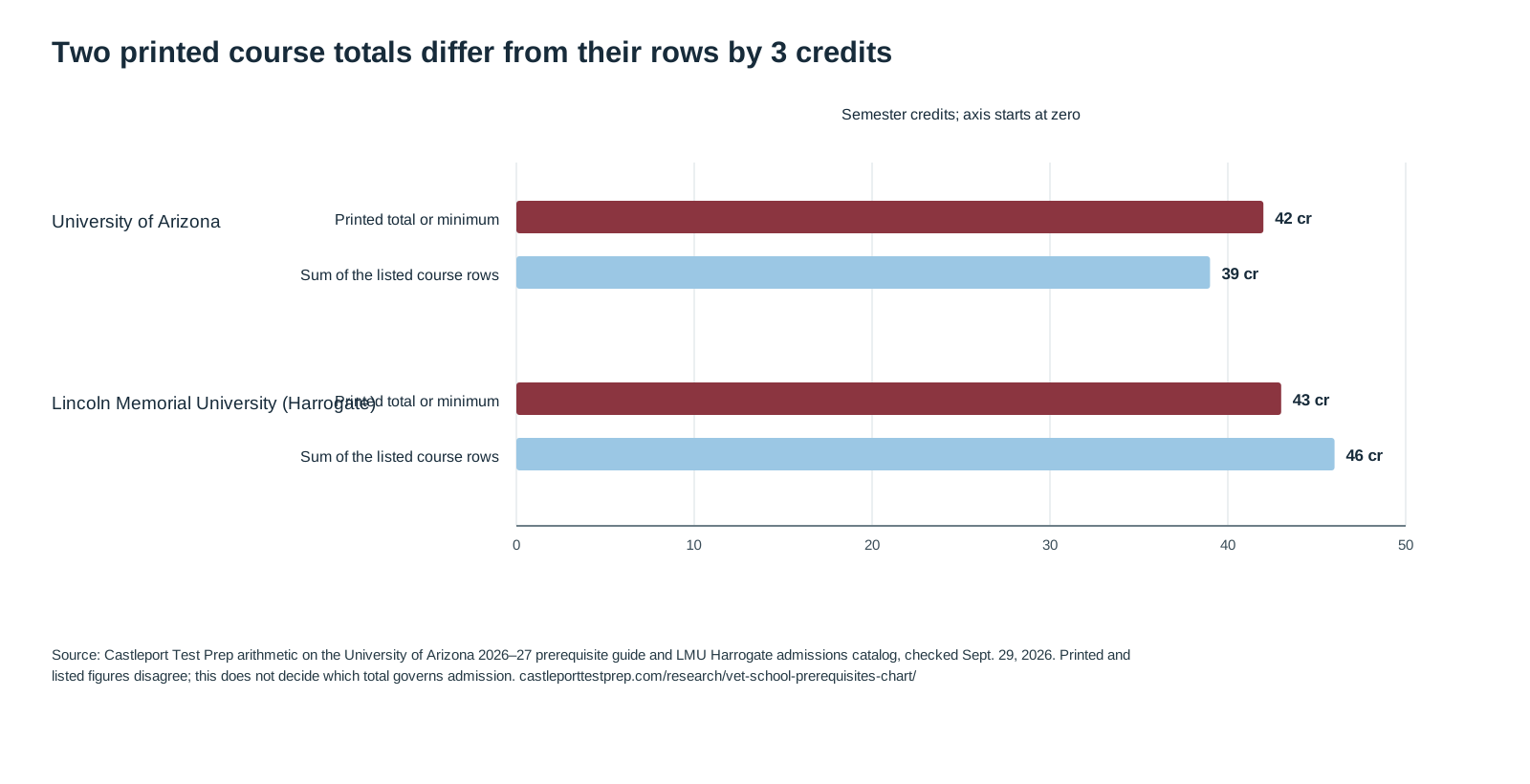
- 3 credits: the gap between the printed total and the listed semester-credit rows in 2 of 12 selected school tables Castleport Test Prep added up on Sept. 29, 2026: Arizona and LMU Harrogate. Inputs, results and school sources.
- Sept. 15, 2026: the deadline that closed the VMCAS 2027 application cycle, according to AAVMC's VMSAR page, checked Sept. 29, 2026. The next opening date was not confirmed in the sources checked.
The vet school prerequisites chart: 38 reviewed U.S. programs
The table lists courses at 38 reviewed U.S. veterinary programs, checked against each school's own requirements page on Sept. 29, 2026. Numbers keep the school's credits or semesters; Ohio State calls its hours guidelines. The last column compares required course lists with AAVMC's 2026-entry chart—not every admission rule.
How to read it:
- cr means semester credits. sem means semester-long courses (the school counts courses, not credits).
- choice means the course is one option in a list you pick from. It isn't required on its own.
- — means the school doesn't name the course. That's not permission to skip it. Your college may still make you take it before a course that is required.
- Changed means a required subject, subject block or explicitly named course sequence differs from AAVMC's 2026-entry chart. Credit-only edits do not count. No counted difference does not mean all credits, labs, grades, deadlines or policies match.
- Genetics content may be built into biology at Tufts and Penn. They count toward 22, but not as separate genetics courses. An anatomy/physiology alternative also stays an alternative.
- Cycle: a date checked is not an entry-year promise. The dated rules and each CSV row keep named-cycle rules, undated pages and future changes separate.
Western's upper-level course group overlaps its separately named microbiology, physiology and genetics/molecular-biology list. The page also forbids double-counting one course. Use its school worksheet to settle that mapping; this table does not add another 9 credits by assumption.
Here's one row in plain words. Take Tufts. It wants two semesters each of biology, general chemistry, organic chemistry and physics. It wants one semester of biochemistry, plus genetics unless your biology course covered it. It doesn't name microbiology or physiology as fixed courses. Statistics can fulfill part of its two-semester math requirement.
Use the school links to check a course before you enroll. The download keeps each school’s full notes with its source.
Which courses do almost all vet schools require?
Biochemistry is required at 37 of the 38 programs reviewed. Physics, biology or a biological-sciences block, and general chemistry are each required at 33, and organic chemistry at 31. After that, schools split: genetics content 22, statistics 16, microbiology 14.
So the core is short. The extras are where your school list matters.
| Course / required content | Programs (of 38) |
|---|---|
| Biochemistry | 37 |
| Physics | 33 |
| Biology / biological sciences | 33 |
| General chemistry | 33 |
| Organic chemistry | 31 |
| Genetics (course or required biology content) | 22 |
| Statistics | 16 |
| Microbiology | 14 |
| Full organic chemistry sequence | 14 |
| Physiology or anatomy/physiology | 9 |
| Animal nutrition | 3 |
Source: Castleport Test Prep count from the 38 school pages in Table 1, checked Sept. 29, 2026. "Required" includes named parts of a required block and genetics content within biology at Tufts and Penn. An either/or route is kept as such. Standalone labs and exclusively upper-level biology blocks are not counted as general biology. Optional subjects are not counted. Download the 38 classification rows.
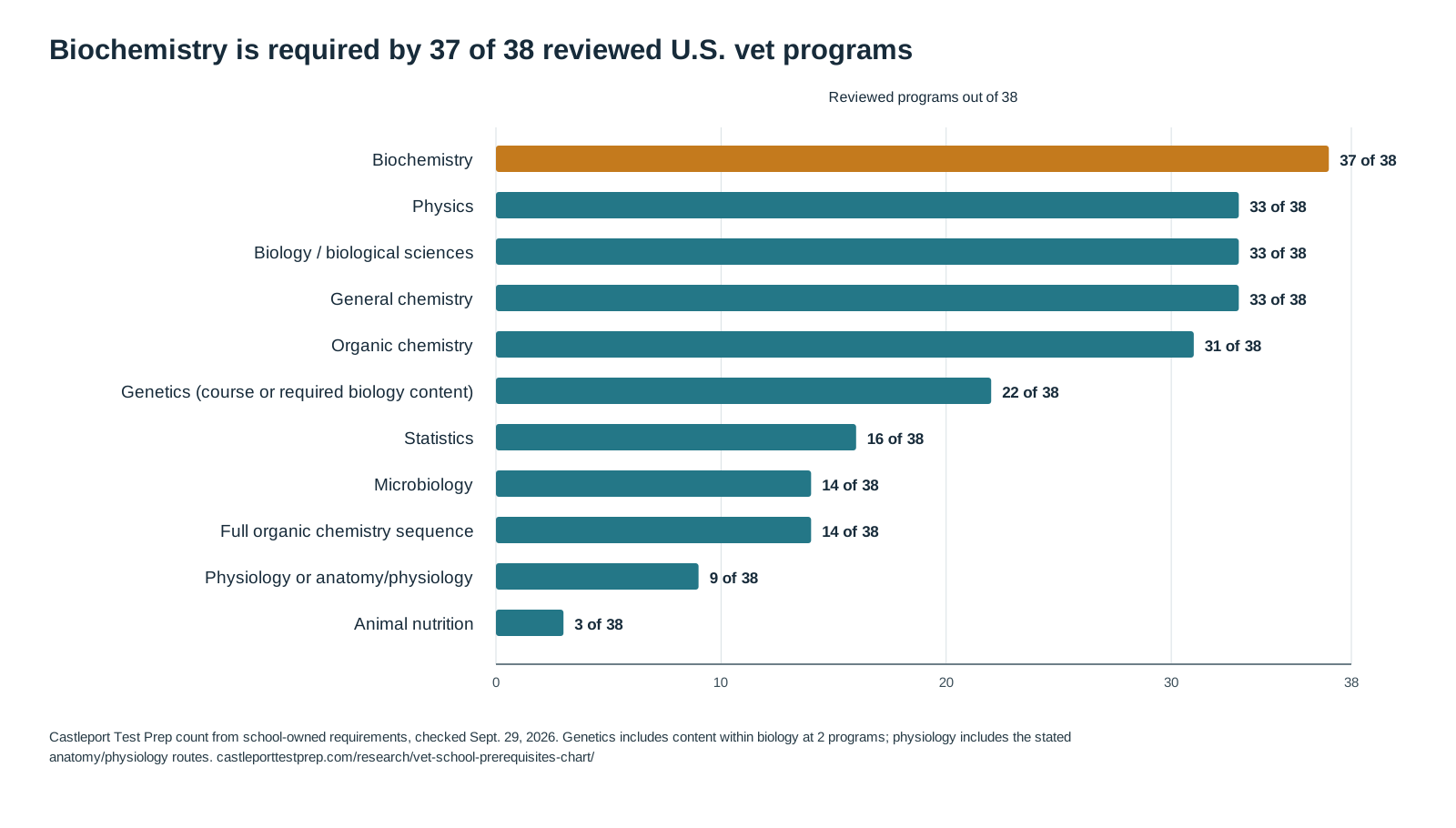
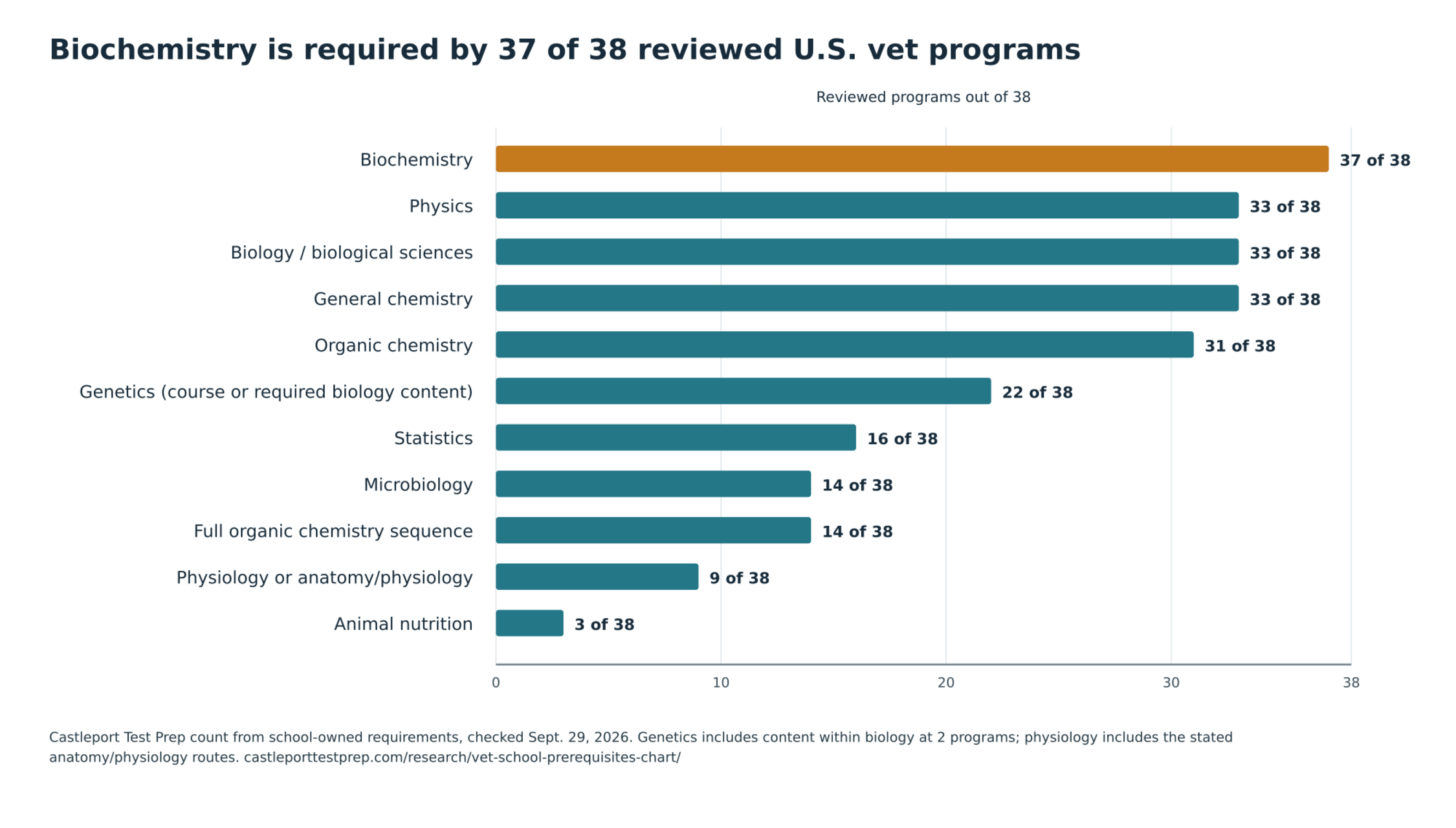
Say you're a sophomore with a year each of biology and general chemistry, Organic I and one physics course. Add biochemistry and you have the common subject areas—not all the courses or credits each school needs. You'd still have homework: 14 schools want a full organic chemistry sequence, and 16 want statistics. Some also require more physics and upper-level science.
One catch. A school that doesn't list organic chemistry may still want a biochemistry course that has organic chemistry as its own prerequisite. Colorado State, Iowa State, LSU and Missouri all say so.
Which vet schools don't require physics, organic chemistry or a bachelor's degree?
Five of the 38 programs have no fixed physics requirement. Seven don't make organic chemistry its own requirement. UC Davis does require a bachelor's degree; other schools admit without one. These exceptions only help if every school on your list shares them.
Vet schools that don't require physics
| School | What the school says |
|---|---|
| Arkansas State University | Physics isn't required. Up to 3 credits of physics can count toward 14 credits of upper-level science. |
| Long Island University | Physics isn't in its eight-course list. |
| Ohio State University | Physics isn't one of its four named courses; you take 35 credits of science electives instead. |
| Rowan University | Physics counts only as one way to meet the 3-credit math requirement. |
| Virginia–Maryland College of Veterinary Medicine | Physics is one optional subject in 24 to 30 self-selected science credits, not a fixed course. |
Source: school pages linked above, checked Sept. 29, 2026.
Vet schools that don't list organic chemistry on its own
Seven programs don't name organic chemistry as its own requirement: Colorado State, Cornell, Missouri, Ohio State, Virginia–Maryland, Washington State and Arizona. Arizona asks for 6 credits of organic chemistry, biochemistry, or one of each. Colorado State and Missouri say your biochemistry course must require organic chemistry, so you'll likely take it anyway.
Which vet schools want the full organic chemistry sequence?
Fourteen do: Auburn, Clemson, LMU Orange Park, Michigan State, Midwestern, Mississippi State, NC State, Purdue, Texas A&M, Tufts, UC Davis, Florida, Georgia and Tennessee. Oklahoma State takes either two semesters or one 5-credit survey course. Illinois sets a 15-credit chemistry block without saying how it splits. Auburn names a 7–8-credit organic chemistry sequence; the other counted rows identify the full sequence, usually Organic I and II. Credit hours alone are not treated as a number of semesters.
Purdue requires Organic I and II, with labs, to be done before you apply.
Do you need a bachelor's degree for vet school?
A bachelor's degree is not universal. UC Davis requires one by the end of spring before you start. AAVMC's chart also marks Tuskegee, but Tuskegee's regular-admission page asks for 100 college credits instead. That is a college-credit minimum, not a claim that 100 credits alone secure admission.
A degree still helps with paperwork. At least 10 reviewed schools waive some English, humanities or general-education courses if you meet their degree conditions: Auburn, Colorado State, Iowa State, Illinois, Michigan State, Mississippi State, Oregon State, Utah State, Washington State and Arkansas State. The timing and extent of each waiver differ; the school notes keep those conditions.
Is the official AAVMC prerequisite chart up to date?
Not for planning from today's school pages. AAVMC's 2026-entry chart has a different required course list for 7 of the 34 reviewed programs it lists and leaves out 4 others. Its 2019-entry chart differs or omits 25 of the 38 reviewed programs. These are historical PDFs, not checks of AAVMC's current directory.
That's 11 of 38 (28.9%) for the 2026-entry chart: 7 different course lists plus 4 missing programs. For the 2019-entry chart, it's 25 of 38 (65.8%): 17 different lists plus 8 missing programs.
| AAVMC chart | No counted course-list difference | Counted course-list difference | Program not listed |
|---|---|---|---|
| 2026-entry edition; updated Jan. 21, 2025 | 27 | 7 | 4 |
| 2019-entry edition; updated March 8, 2018 | 13 | 17 | 8 |
Source: Castleport Test Prep comparison of AAVMC's newest chart and its 2019-entry chart with the 38 school pages in Table 1, Sept. 29, 2026.
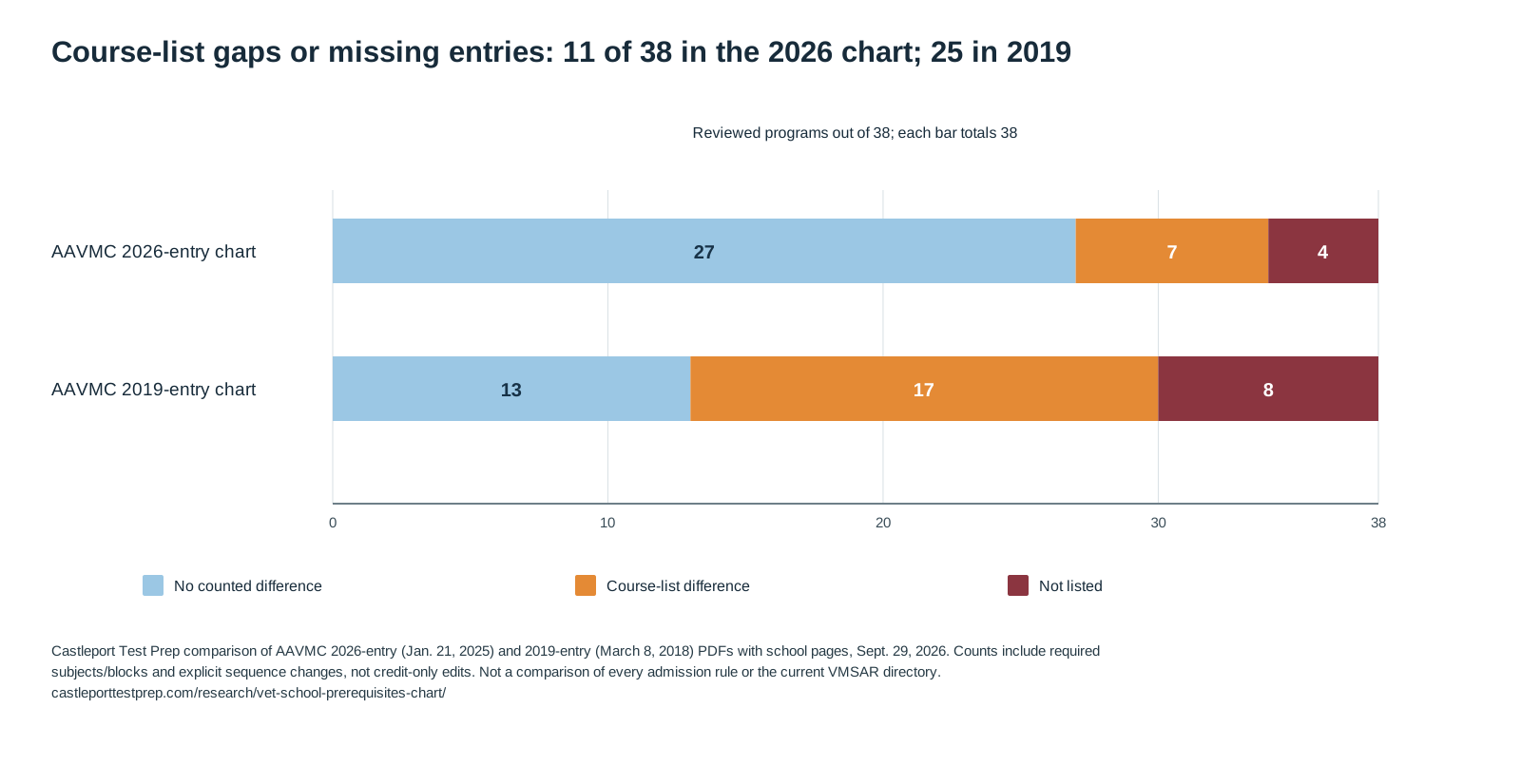
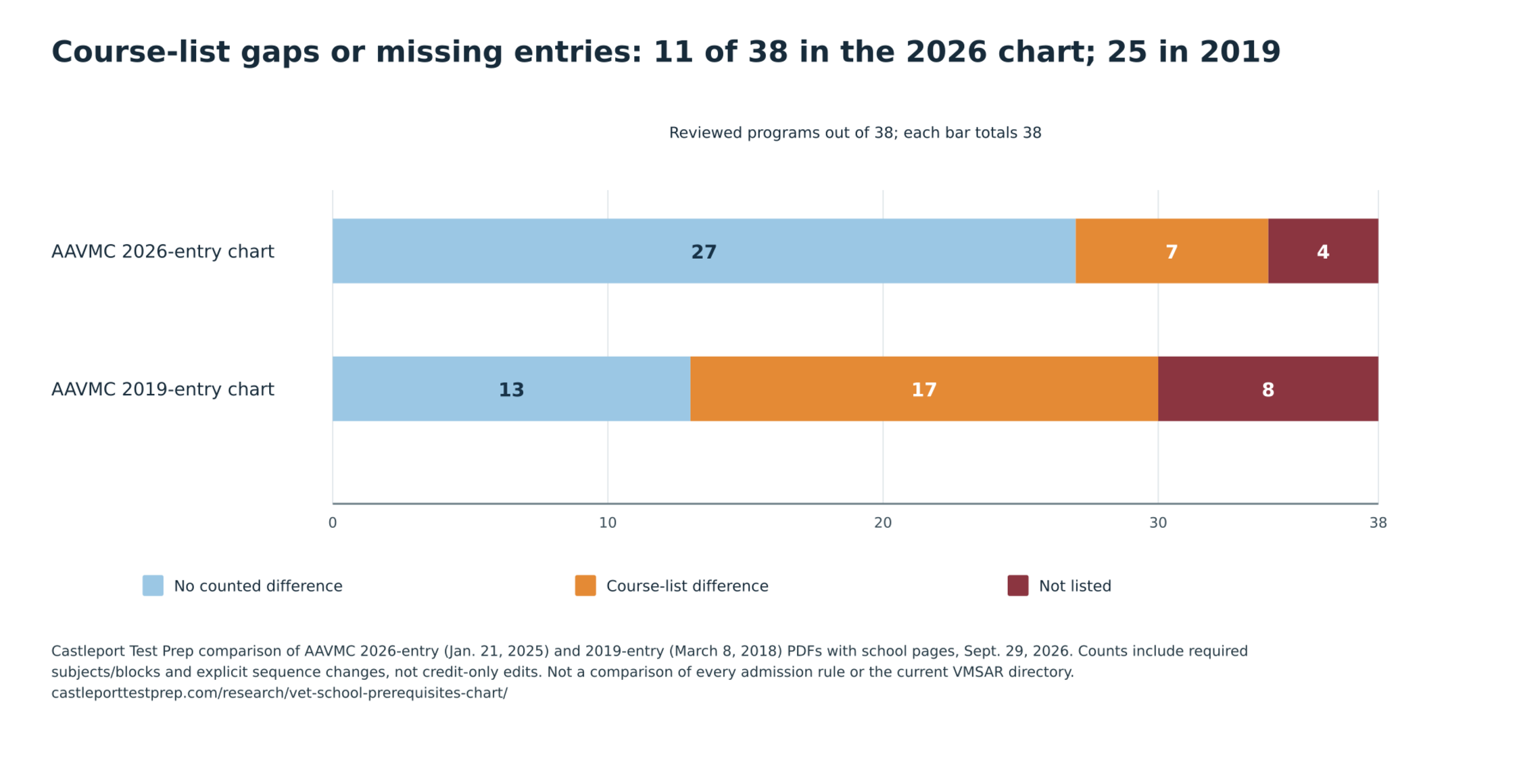
The 2026-entry PDF says it is for use in 2025 for 2026 entry and is subject to change. It is the latest standalone prerequisite chart retrieved in this audit—not a promise about the next entry cycle. That is why the school-source links matter.
Which versions of the AAVMC chart are online?
| Version | What the file says | What we found |
|---|---|---|
| 2019-entry edition | "For 2019 Matriculation," updated March 8, 2018 | Still posted on aavmc.org. Missing 8 of today's 38 programs. |
| VMCAS 2026 edition | "For use in 2025 for 2026 matriculation" and, in the same header, "for 2025 Matriculation"; updated Jan. 21, 2025 | Latest standalone chart retrieved. Counted course-list differences at 7 reviewed programs; 4 not listed. |
| "Pre-Requisite Chart" link on AAVMC's VMSAR site | Site header: "2026 Edition for Application Cycle 2027" | The link opened the VMCAS 2025 Applicant Guide, not a chart. |
Source: the files linked above, opened Sept. 29, 2026. The VMSAR link destination was checked directly; it contains the VMCAS 2025 Applicant Guide despite the prerequisite-chart link text.
The PDF also contains details to read carefully. Its Washington State entry gives an Aug. 1, 2025 completion date, and its Texas Tech entry lists "Physics Chemistry" where physics belongs. Mississippi State's spring-2020 grading note is a dated exception—not proof by itself that a policy is out of date.
AAVMC's own school directory, VMSAR, offers more detail, but it asks you to register first. This chart doesn't.
Which school course lists differ from the 2026-entry chart?
| School / source | 2026-entry AAVMC chart | School page checked Sept. 29, 2026 | Counted in the 7? |
|---|---|---|---|
| Cornell University | Organic chemistry (1 semester); 3 cr advanced life science | No organic chemistry requirement; 12 cr advanced life sciences; 6 cr humanities/social sciences (list for Class of 2031 applicants) | Yes |
| Iowa State University | No upper-level biomedical requirement | 9 cr upper-level biomedical science | Yes |
| Kansas State University | Public speaking (2 cr) | No public speaking; its 53-credit total adds up without it | Yes |
| Rowan University | No microbiology | Microbiology (3 cr) | Yes |
| Texas A&M University | Physics 8 cr; English 6 cr | Physics 4 cr; English 3 cr | No — credit-only comparison |
| University of Arizona | Physics or biophysics, 6 cr | Physics I or Biophysics I, 3 cr | No — credit-only comparison |
| Tuskegee University | Physical education 2 cr if no BS; 67 cr total | No physical-education row in the current regular-admission table; 65 cr total | Yes |
| University of Florida | English 6 cr; general education 15 cr | Science and math only | Yes |
| Washington State University | Organic chemistry with lab (4 cr) | No organic chemistry requirement; two upper-division biomedical courses (6 cr) | Yes |
Source: AAVMC VMCAS 2026 chart (updated Jan. 21, 2025) and the school pages linked, checked Sept. 29, 2026.
"Changed" has a strict meaning here. The school's page adds or drops a required subject or subject block, or changes an explicitly named two-course sequence. Credit-hour tweaks alone don't count, and we do not infer two courses from an 8-credit figure. That is why the Texas A&M and Arizona credit differences remain visible above but are not in the 7.
The older 2019-entry chart explicitly names Texas A&M Physics I and II, so that sequence difference does count in the older comparison. Its Oklahoma State footnote already announces the statistics requirement for fall 2019; that is not counted as a new subject difference. Both decisions are recorded for each program in the count-audit CSV.
These five other differences do not add another program to the course-list count:
- LMU Harrogate: now requires both anatomy and physiology. The chart's own footnote warned about this.
- Michigan State: physiology can be lower or upper level. The chart says upper-level.
- Ohio State: one intro all-systems physiology course now counts.
- Western: genetics can be swapped for molecular biology.
- Tuskegee: the chart marks it "bachelor's required," but its page asks for 100 credits.
Four programs absent from both charts we checked
| Program | Status | Science courses the school requires | Worth knowing |
|---|---|---|---|
| Arkansas State University | First cohort was on campus in August 2026; AVMA's June 2026 list still records its earlier letter of reasonable assurance | Biology and general chemistry with labs (8 cr each), Organic I (3), biochemistry (3), statistics or college algebra (3), plus 14 cr upper-division science | Physics isn't required; bachelor's degree not required |
| Clemson University | First class admitted fall 2026 | Biology I–II, general chemistry I–II, Organic I–II, Physics I–II (8 cr each), biochemistry (3), statistics (3) | No standardized test; 100 hours each of supervised, animal and community-service experience |
| Lincoln Memorial University (Orange Park) | AVMA's June 2026 list says provisional accreditation; taking applications for summer 2027. The school's accreditation page still describes its earlier letter | Biology 8, general chemistry 6, organic chemistry 6 (two courses), biochemistry 3, genetics 3, physics 3, anatomy and/or physiology 3 | Different from LMU's Harrogate campus, which asks for 3 cr of organic chemistry but separate anatomy and physiology |
| Utah State University | First class started Aug. 11, 2025 | Biology 8, general chemistry 10, organic 4, biochemistry 3, physics 4, genetics 3, statistics 3 | Requires the AAMC PREview exam |
Source: school pages linked above; AVMA's dated college list; Arkansas State's August opening report; Utah State dean's message; LMU's earlier announcement. Checked Sept. 29, 2026. The LMU sources do not establish an actual first teaching day.
A letter of reasonable assurance is the step that lets a new vet school start admitting students. It comes from the AVMA Council on Education, which accredits vet schools.
What else do vet schools require besides the science core?
Most schools add English, humanities or upper-level biology. A few add rarer courses: medical terminology at Tuskegee and Virginia–Maryland, animal nutrition at Oklahoma State, Texas A&M and Texas Tech, and cell biology at Colorado State and Tennessee.
| School / source | Other required courses and totals | Course notes / how checked |
|---|---|---|
| Arkansas State University | Statistics or college algebra 3 cr; composition 6 cr (waived with a bachelor's); 14 cr advanced science (up to 3 cr physics may count); 17 cr other electives; 31-credit named subtotal plus 31 electives = 62 before degree waiver | The printed 31-credit subtotal is not the full coursework requirement. Advanced-science electives add 14 credits and other electives 17. Physics may be at 200 level; other advanced science is 300 level or higher. First cohort was on campus in August 2026. Full school-owned course list read directly. |
| Auburn University | 2 science electives (6 cr); English, humanities, history/social science and math only if no bachelor's by June 15 | Biology, general chemistry and organic chemistry each list a 7–8-credit sequence with at least one lab. Physics is 4 credits; the prerequisite table does not separately label its lab. Two science electives total 6 credits. Degree-based general-education waiver applies if the degree is earned by June 15. Full school-owned course list read directly. |
| Clemson University | Composition (3 cr); communication or public speaking (3 cr) | General biology may be met with the listed two-course sequence; approved equivalents can have different credit values. No bachelor's degree required. Full school-owned course list read directly. |
| Colorado State University | Cell biology (3 cr); 9 cr upper-division biomedical science; English comp (waived with a 4-year degree); 12 cr arts/humanities/social science; 15 cr electives. Biochemistry must require organic chemistry. | The two 1-credit lab requirements are not general biology or general chemistry lecture requirements. Biochemistry must require organic chemistry. A single course from a two-part combined anatomy/physiology series does not fulfill physiology. Full school-owned course list read directly. |
| Cornell University | 12 cr advanced life sciences; English/writing 6 cr; humanities/social sciences 6 cr; 60 credits total | 60 college semester credits, including at least 30 upper-level credits at a four-year institution. Biology, chemistry and physics are full-year sequences. Advanced life sciences total 12 credits; biostatistics is an eligible option. No separate organic chemistry course in the current list. Full school-owned course list read directly. |
| Iowa State University | 9 cr upper-level biomedical science; English 6 cr; oral communication 3 cr; arts/humanities/social science 6 cr; electives 8 cr | Biochemistry must be upper-level metabolic biochemistry with organic chemistry as a prerequisite. Organic I and Physics I must be from a two-semester series, not one-semester overview courses. A biology bachelor's degree can satisfy general biology. Degree-related English/oral-communication waivers have conditions. Full school-owned course list read directly. |
| Kansas State University | Writing I and II (6 cr); social sciences/humanities 12 cr; printed total 53 cr | Organic chemistry accepts 3 lecture credits plus 1 lab credit. Anatomy/physiology is strongly recommended, not a separate fixed requirement. A bachelor's degree does not waive the listed prerequisites. Full school-owned course list read directly. |
| Lincoln Memorial University (Harrogate) | 8 cr advanced science electives (300+); English 3 cr; social sciences 3 cr; printed minimum 43 cr | Anatomy 3 credits with lab AND physiology 3 credits are separate. Listed semester rows total 46, but the catalog prints a 43-credit minimum. Quarter rows total 66 and match. The 2026 AAVMC chart already footnotes the anatomy/physiology change. Full school-owned course list read directly. |
| Lincoln Memorial University (Orange Park) | 8 cr advanced science electives; English 3 cr; social sciences 3 cr; printed minimum 46 cr | Separate veterinary college from LMU Harrogate. Anatomy and/or physiology is one 3-credit requirement. General and organic chemistry each cover two courses and labs. AVMA's June 2026 listing shows provisional accreditation; the school's accreditation page still describes the earlier letter of reasonable assurance. Full school-owned course list read directly. |
| Long Island University | Statistics or calculus (3 cr); English composition (3 cr); printed total 26 cr | 60 college credits required; a degree is preferred. Six-year prerequisite rule except math and English; exceptions may be granted for specified medical degrees with continued practice. Full school-owned course list read directly. |
| Louisiana State University | College-level math 6 cr (statistics/probability can count); English 6 cr; 22 cr humanities/social/other; 66 cr total | A bachelor's degree does not waive the requirements. Biochemistry must require organic chemistry. The 6-credit math requirement accepts statistics and probability, among other listed subjects. Full school-owned course list read directly. |
| Michigan State University | Math 3 cr (statistics does not count); upper-level biology 3 cr; general education waived with a bachelor's | General Chemistry I, not II, fulfills the chemistry prerequisite. Physiology must cover all systems; upper or lower level accepted. Statistics does not fulfill math. A bachelor's degree completed by July 1 can satisfy general education; science is still required. Full school-owned course list read directly. |
| Midwestern University | Math 6 cr; English composition 6 cr; science electives 8 cr; 64 cr total; 240 experience hours | 64 total college semester hours. The 240 experience hours can combine veterinary practice, health science, biomedical research and non-veterinary animal experience; they are not all required to be veterinary hours. Full school-owned course list read directly. |
| Mississippi State University | Writing 3 cr; math 6 cr; 6 cr upper-level science/math; 15 cr humanities/social/fine arts (writing and humanities waived with a bachelor's) | The limit is 3 science/math courses without grades at application, excluding associated labs. Six upper-level science/math credits must be within 5 years. Degree-based writing/humanities waivers require the degree before application. Full school-owned course list read directly. |
| North Carolina State University | 6 cr composition, writing, public speaking or communication; 6 cr humanities/social sciences; 200 experience hours | A grade below C- must be replaced before the application cycle, not during its fall or spring. Required courses must be letter-graded except accepted AP. 200 qualifying experience hours are due at application, supervised by a veterinarian or a PhD scientist for research. Full school-owned course list read directly. |
| Ohio State University | Public speaking 3–5 cr (suggested); 35 cr science electives; 16 cr humanities/social science; total 65–81 cr is a guideline | Published hours are guidelines, not universal minimums. A two-part biochemistry sequence needs both parts. The four named subjects are biochemistry, microbiology, physiology and communication. Full school-owned course list read directly. |
| Oklahoma State University | English composition I, II and an English elective (9 cr); humanities/social sciences 6 cr; printed total 64 cr | Organic chemistry accepts a qualifying 5-credit survey with lab or the 8-credit sequence; the survey must cover aliphatic and aromatic compounds. Microbiology accepts 4 or 5 credits. Nutrition, biochemistry, genetics and organic chemistry must be at a four-year institution. Full school-owned course list read directly. |
| Oregon State University | Precalculus or higher; 1 upper-division biology with lab; English, public speaking, humanities waived with a bachelor's by July 1 | School lists 2 semester or 2 quarter physics courses; organic and biochemistry each need 1 semester or 2 quarters. General-education waiver requires a bachelor's degree by July 1. Casper's conflicting cycle labels need school confirmation. Full school-owned course list read directly. |
| Purdue University | English composition; communication; 3 humanities courses; Careers in Veterinary Medicine (if available) | All course quantities are semesters, not credit hours. Organic Chemistry I and II with labs must be complete when applying. Complete the full upper-division biochemistry course, not half of a two-part sequence. Careers in Veterinary Medicine is required only if available. Full school-owned course list read directly. |
| Rowan University | Two upper-level biology courses (6 cr); English/writing 6 cr; math 3 cr (calculus, statistics or physics); social science/humanities 6 cr; 60 cr total | Math can be calculus, statistics or physics; physics is not a separate fixed requirement. The notice about no 3+4 pathway applications for 2027–2028 does not close regular DVM admissions. No science-prerequisite recency limit. Full school-owned course list read directly. |
| Texas A&M University | English 3 cr; public speaking 3 cr. Genetics, nutrition, biochemistry at a 4-year school. Applies through TMDSAS. | 46 named prerequisite credits. Genetics, animal nutrition or feeds/feeding, and biochemistry must be from a four-year institution. Biochemistry must count lecture hours only. Applies through TMDSAS. Full school-owned course list read directly. |
| Texas Tech University | English 3 cr; printed prerequisite total 39 cr; 48 college semester credits by end of spring; Texas and New Mexico residents only; applies through TMDSAS | The complete 39-credit course table was checked directly. Biology 4, microbiology 4, general chemistry 8, organic chemistry 4 and physics 4 include labs. Nutrition, biochemistry, genetics, statistics and English are 3 credits each. Anatomy/physiology is recommended, not required. Full school-owned course list read directly. |
| Tufts University | Math 2 sem; English 2 sem; social/behavioral sciences 2 sem; humanities/fine arts 2 sem; 90 semester hours before enrolling. Genetics not needed if covered in general biology. | Genetics content can be in general biology instead of a separate genetics course. Statistics is an accepted way to meet the two-semester mathematics requirement. 90 undergraduate semester hours before enrollment; online lectures may need advance review, labs must be in person. Full school-owned course list read directly. |
| Tuskegee University | Medical terminology 1 cr; intro to animal science 3 cr; science electives 8 cr; English 6; humanities/social 6; liberal arts 6; math 6; 100 college credits | Regular admission: 100 college credits, including the 65-credit prerequisite table. The Early Assurance section is a separate route; its biology list and 3.5/3.3 GPA thresholds must not be applied to regular applicants. The 2-credit physical-education row in the 2026 chart is absent from the current regular table. Full school-owned course list read directly. |
| University of Arizona | 6 cr of Organic I+II, Biochem I+II, or one of each; math 3 cr; writing-intensive English 3 cr; arts/humanities 6; social sciences 6; printed total 42 cr (rows add to 39) | The shared chemistry category accepts Organic I–II, Biochemistry I–II, or one of each, totaling 6 credits once. Semester course rows sum to 39 against printed 42; quarter rows sum to 60 against printed 64. No source resolves which total governs. 90 college credits is a separate minimum. Full school-owned course list read directly. |
| University of California, Davis | Biochemistry, genetics, physiology must be upper division at a 4-year school; bachelor's degree required; 180 veterinary experience hours | 75% of prerequisites completed before applying, with approximately 3 courses pending. Biochemistry, genetics and systemic physiology must be upper division at a four-year institution. Physics quarter-sequence coverage can require 2 or 3 courses. 180 veterinary experience hours by application. Full school-owned course list read directly. |
| University of Florida | Science and math only; biochemistry, genetics and microbiology at a 4-year school | The course page strongly recommends no more than 3 prerequisites missing at application; do not turn that wording into an unconditional cap. Biochemistry, genetics and microbiology with lab must be upper-level at a four-year degree-granting institution. Full school-owned course list read directly. |
| University of Georgia | 8 cr advanced biology (300+); English 6 cr; humanities/social studies 14 cr | Science prerequisites must be undergraduate and within 10 years. Required labs in person from fall 2023; online prerequisites taken Spring 2020–Spring 2023 remain recognized. Advanced biology excludes behavior, production and ecology. Full school-owned course list read directly. |
| University of Illinois Urbana-Champaign | 15 cr chemical sciences (general, organic, biochemistry; at least 3 cr labs). Without a bachelor's: composition 3 cr plus another 3 cr composition and/or speech, 12 cr humanities/social, and 12 additional cr upper-level science | Plan A requires a bachelor's degree by entry. Plan B admits without one and requires 60 college credits including 44 science credits. Biology coursework 10 years and older is excluded beginning with the 2026–27 application period. Full school-owned course list read directly. |
| University of Minnesota | Advanced biology 3–5 cr; algebra or higher 3–5 cr; English 6–10 cr; 3 liberal education courses | No more than 5 math/science prerequisites in progress across application-cycle fall/spring. General chemistry and physics each require the full sequence. Required biology has a lab; organic, biochemistry, genetics and physics labs are not required. Genetics is 3–5 credits; advanced biology is separate. Full school-owned course list read directly. |
| University of Missouri | Composition/communication 6 cr; college algebra+ 3 cr; social science/humanities 10 cr; 60 cr total. Biochemistry must require organic chemistry. | The 10-credit biological-sciences block is not specifically 10 credits of introductory biology. Physics I–II sequence is required despite the 5–10-credit range. Biochemistry requires organic chemistry. Statistics is recommended, not counted here as a fixed prerequisite. Full school-owned course list read directly. |
| University of Pennsylvania (VMD) | English 6 cr (at least 3 composition); humanities/social sciences 6 cr; calculus 3 cr; statistics 3 cr; 90 college credits before entry | Matriculation requirements, not requirements to finish before applying. Chemistry is 12 credits total: 8 general plus at least 4 organic, with at least one chemistry lab. Biology is 9 credits and must include basic genetics. Physics is 8 credits with two labs; microbiology and biochemistry are 3 each. No bachelor's degree required. Full school-owned course list read directly. |
| University of Tennessee | Cellular biology 3 cr; English composition 6 cr; social sciences/humanities 18 cr; printed total 66 cr | Biochemistry is 4 lecture credits; half of a two-semester biochemistry sequence does not suffice. Cell biology 3 credits and genetics 3 are separate. The admissions page contains both 2026–27 application wording and older fall-entry text; do not force one cycle label. Full school-owned course list read directly. |
| University of Wisconsin–Madison | English composition or journalism 6 cr; social science or humanities 6 cr. Genetics can be animal breeding. | Biology or zoology with lab 4–5 credits; genetics or animal breeding 3. Physics is a full academic year, 6 semester credits or the stated quarter equivalent. 60 college semester credits required, including at least 17 electives. Full school-owned course list read directly. |
| Utah State University | Math 4 cr; English/communication 6 cr and arts/humanities/social/history 21 cr (general education waived with a bachelor's before entry); prerequisite math/science GPA 3.1 | Inorganic chemistry requires 10 credits with lab, not WSU's 8. Biology requires lab; organic chemistry, physics and genetics do not. AAMC PREview required; GRE not accepted or required. Degree/72-credit recommendation for financial aid is not a new admissions minimum. Full school-owned course list read directly. |
| Virginia–Maryland College of Veterinary Medicine | Communication/public speaking 1 sem; medical terminology 1 sem; 24–30 cr self-selected science (up to 6 math); 16–20 cr humanities/social/behavioral science | Competency-based scheme: 4 fixed subjects plus self-selected science and humanities blocks. Organic chemistry, physics and statistics are optional examples, not absent from the page. Up to 6 math credits can count in science. Biochemistry/microbiology labs are not required. Full school-owned course list read directly. |
| Washington State University | Two upper-division biomedical science courses (6 cr); algebra or higher 3 cr; English/communication 6 cr; arts/humanities/social/history 21 cr; printed total 65 cr | A bachelor's degree before entry fulfills general education, but not science/math prerequisites. Two upper-division biomedical courses total 6 credits. The linked admissions hub confirms no prerequisite expiration date. Full school-owned course list read directly. |
| Western University of Health Sciences | Three upper-division biology courses (9 cr, one with lab); genetics or molecular biology 3 cr; English composition 6 cr; 3 humanities/social courses | Genetics and molecular biology are alternatives. The page's three-course upper-division group overlaps its named microbiology/physiology/genetics list; do not automatically add or double-count 9 credits. One course cannot fulfill multiple prerequisites; school worksheet/equivalency review resolves mapping. Physics requires two lectures and two labs. Full school-owned course list read directly. |
Source: school pages linked in Table 1, checked Sept. 29, 2026.
Upper-level means a junior- or senior-level course, usually numbered 300 or higher. Several schools want 6 to 14 credits of it. Colorado State and Iowa State each want 9. Arkansas State wants 14.
Can prerequisites be in progress when you apply, and do old courses expire?
It depends on when the school counts. Some count unfinished courses when you apply (2 at Long Island, Rowan and Oregon State; 3 at Auburn; 4 at Purdue), and others count after fall grades or in your last spring. 15 of the 38 name a 6-to-10-year completion window for some coursework; exceptions and review-only rules are shown separately.
| School / source | Unfinished courses / checkpoint | Course-age rule | Final completion deadline |
|---|---|---|---|
| Arkansas State University | No numerical cap stated; all prerequisites must be finished by July 15 | Advanced science courses within 10 years | July 15 before entry |
| Auburn University | No more than 3 prerequisites outstanding at application; the application page also uses the narrower wording 3 science prerequisites | Not stated on page checked | June 15 before fall entry |
| Clemson University | No more than 2 prerequisites may be in progress at application | Recent courses (5 years) encouraged, not required | All prerequisites must be completed before matriculation |
| Colorado State University | No numerical cap stated; list completed, in-progress and planned courses in VMCAS | Biochemistry, cell biology, genetics and systems physiology must be within 10 years of matriculation | July 15 before entry; final transcripts also due July 15 |
| Cornell University | Up to 12 semester credits (18 quarter credits) in progress at application; at least one semester of any two-semester series must be underway | Over 10 years accepted but not preferred | End of spring before entry; final prerequisite work/transcripts due June 15 |
| Iowa State University | No more than 2 required science courses may remain after fall grades; no numerical cap on remaining non-science courses | Science prerequisites older than 10 years are reviewed; not an automatic expiry rule | 64 college credits by end of spring; remaining grades/transcripts must arrive by July 1 |
| Kansas State University | No numerical application-stage cap stated; all courses due by the spring term before entry | Science prerequisites within 6 years of enrollment; older foundation courses may count when the specified advanced science courses were completed within 6 years | End of spring before entry |
| Lincoln Memorial University (Harrogate) | In-progress or planned courses permitted; no numerical application-stage cap stated | Science courses within 10 years | Successful completion documented by the published admissions deadlines; exact date not stated in the catalog section |
| Lincoln Memorial University (Orange Park) | In-progress or planned courses permitted; no numerical application-stage cap stated | Science prerequisites within 10 years | Before orientation |
| Long Island University | Up to 2 in progress at application | 6 years (except statistics/calculus and English) | Fall after application or spring before entry |
| Louisiana State University | In-progress/planned work allowed; no numerical cap stated | Prerequisites generally within 10 years; older lower-level work reviewed case by case. Organic chemistry, biochemistry and microbiology with lab must be within 10 years | End of spring before entry |
| Michigan State University | 100% of science prerequisites must be complete, with grades on VMCAS transcripts, when applying; general education may remain | At least one of Biology I, Biology II, biochemistry or upper-level biology must be within 8 years; that satisfies recency for the other biology courses. Chemistry, physics and math have no stated age limit | Science prerequisites at application; general education by July 1 before entry |
| Midwestern University | In-progress/planned work allowed; no numerical cap stated | Not stated on page checked | Before matriculation |
| Mississippi State University | No more than 3 science/math courses without grades at application (labs not counted) | 6 upper-level science/math credits needed within the last 5 years | End of spring before entry; no May-mester or summer completion |
| North Carolina State University | No more than 2 prerequisite groups unfinished after fall; the school counts microbiology plus its lab as 1, adding statistics as 2, and adding a separate physics lab as 3 | Not stated on page checked | End of spring before entry; no summer completion |
| Ohio State University | May apply before all prerequisites are complete; no numerical cap stated | Science older than 10 years needs recent coursework or evidence of current mastery | End of summer before fall entry |
| Oklahoma State University | Must be within two semesters of finishing by June 1 after applying | Math and science within 8 years | June 1 before entry; replacement of a grade below C must be finished by fall of the application year |
| Oregon State University | No more than 2 in progress at application | Courses do not expire | August 1 before entry; final transcripts due August 15 |
| Purdue University | No more than 4 science/math planned or in progress; Organic I and II with labs must be done | Not stated on page checked | End of spring before entry; no summer completion |
| Rowan University | Up to 2 in progress at application | No recency rule | July 31 before entry, including transcripts |
| Texas A&M University | Organic I with lab, physics with lab and Biochemistry I must be complete or underway at application and finished by December | Within 10 years | All prerequisites by end of spring before entry |
| Texas Tech University | In-progress/planned work permitted; no numerical application-stage cap stated | Within 10 years | End of spring before entry |
| Tufts University | Not stated on page checked | Not stated on page checked | Before enrollment |
| Tuskegee University | Not stated on page checked | Science courses within 6 academic years | Not stated on page checked |
| University of Arizona | No more than 2 prerequisite courses in progress when VMCAS is submitted | Not stated on page checked | June 30 before August entry; the web page's application-year wording is ambiguous |
| University of California, Davis | About 3 may be pending (75% done at application) | Prerequisites do not expire | End of spring semester/quarter before fall entry; bachelor's degree also due by end of spring |
| University of Florida | No more than 3 missing at the VMCAS deadline (strongly recommended) | Not stated on page checked | End of spring before August entry |
| University of Georgia | Not stated on page checked | Science courses within 10 years | End of spring before entry |
| University of Illinois Urbana-Champaign | No more than 2 prerequisites incomplete in spring before entry; none in the preceding summer | Biology 10+ years old not counted (from VMCAS 2026–27) | End of spring before entry; no summer completion |
| University of Minnesota | No more than 5 math/science in progress | Math/science prerequisites within 10 years of the application deadline; petition possible | June 15 before entry; no immediately preceding summer courses |
| University of Missouri | Only 2 pending in the spring before entry | Not stated on page checked | Not stated on page checked |
| University of Pennsylvania (VMD) | Requirements need not be complete at application | Not stated on page checked | Late July before August entry |
| University of Tennessee | Not stated on page checked | Not stated on page checked | End of spring before intended entry |
| University of Wisconsin–Madison | Up to 4 outstanding required courses after application; no more than 2 taken in spring before entry | Not stated on page checked | End of spring before entry |
| Utah State University | For 2027 entry no numerical cap stated; from the 2027–28 VMCAS cycle (2028 entry), at most 3 outstanding courses and organic chemistry already complete | Not stated on page checked | July 1 before entry |
| Virginia–Maryland College of Veterinary Medicine | Prerequisites may remain after application; no numerical cap stated | If all prerequisites were completed 5 years before application, current biological-science academic/work evidence is needed | End of spring before entry; final official transcripts due June 30 |
| Washington State University | Courses may be in progress or planned | Prerequisites do not expire | August 1 before entry |
| Western University of Health Sciences | No more than 2 of the named advanced-science groups in progress after December 31; no general application-stage cap stated | Not stated on page checked | End of spring before entry |
Source: the school links in each row and auxiliary sources in the CSV, checked Sept. 29, 2026. All 38 programs are shown. A missing numeric cap is not permission to leave courses unfinished; the final deadline still applies. The 15-program count includes completion windows for named coursework, not a statement that every older course expires.
Watch the checkpoint, not just the number. Oregon State's "2" counts what's unfinished when you apply in September. NC State's "2" counts what's still left after that fall's grades come in. Same number, different deadline.
A few rules have named effective years. Utah State's cap of 3 unfinished prerequisites and completed organic chemistry starts with the 2027–2028 VMCAS cycle, for 2028 entry—not 2027. Illinois's 10-year biology rule starts with the 2026–27 application period.
Can you take vet school prerequisites online?
Often for lectures, but labs are where schools split. At least 6 of 38 programs say required labs must be in person, while LSU accepts online labs and Arizona doesn't require science labs at all.
| School / source | Lab rule | Minimum course grade |
|---|---|---|
| Arkansas State University | Online courses accepted. Biology row requires an in-person lab; broader text calls in-person labs strongly encouraged. This wording needs course-specific confirmation | C |
| Auburn University | At least one lab each in biology, chemistry, organic | C- |
| Clemson University | Labs listed with biology, organic chemistry and physics | C- |
| Colorado State University | 1-credit biology lab, 1-credit chemistry lab and physics with lab required; physiology lab not required | C- |
| Cornell University | Biology, chemistry, physics labs in person | C- |
| Iowa State University | Biology, chemistry, organic and physics with lab | C (C- not accepted) |
| Kansas State University | Required biology, chemistry, organic, microbiology and physics labs may be online; online courses accepted | C- |
| Lincoln Memorial University (Harrogate) | Biology, anatomy, organic and general chemistry with lab | C- |
| Lincoln Memorial University (Orange Park) | Biology, organic, general chemistry, anatomy/physiology with lab | C- |
| Long Island University | General and organic chemistry with lab | C |
| Louisiana State University | Online courses and labs accepted; biology, general chemistry and microbiology labs required; organic chemistry and physics labs not required | C- |
| Michigan State University | One biology lab, General Chemistry I lab, one organic lab and both physics labs required | C (2.0) or accepted binary grade for science prerequisites; up to 8 science prerequisites may use binary grading |
| Midwestern University | General chemistry, organic, physics with lab | C; pass/fail or satisfactory/unsatisfactory not accepted for prerequisite science |
| Mississippi State University | In-person or online courses accepted; physics labs not required | C- |
| North Carolina State University | Biology, chemistry, organic, microbiology, physics with lab | C- |
| Ohio State University | Microbiology lab required; biochemistry and physiology labs not required | C or higher in the 4 named subjects; together they need a 3.0 average, with no more than one C |
| Oklahoma State University | Biology, chemistry, organic, physics, microbiology with lab | C (C- not accepted) |
| Oregon State University | Online lectures and labs accepted; general chemistry labs and at least one additional upper-division biology lab required | C- |
| Purdue University | All labs on site at an institution; online lectures allowed | C- |
| Rowan University | Required labs in person with an instructor; at-home kits do not count. Spring 2020–Spring 2022 lab exception is retained | C- |
| Texas A&M University | Biology, microbiology, chemistry, organic, physics with lab | C |
| Texas Tech University | Not stated on page checked | C |
| Tufts University | All labs in person; no online or at-home labs | Not stated on page checked |
| Tuskegee University | Biochemistry, chemistry, organic, physics with lab | C; pass/fail courses not accepted for transfer credit |
| University of Arizona | Science labs not required (strongly recommended) | C- |
| University of California, Davis | Courses and labs may be online; biology and general chemistry labs required, one organic chemistry lab total, physics lab not required | C (C- not accepted) |
| University of Florida | Biology, chemistry, organic, physics, microbiology with lab | C (C- must be retaken) |
| University of Georgia | Required labs in person (since fall 2023); hybrid lectures allowed | C |
| University of Illinois Urbana-Champaign | Biology, general and organic chemistry, physics with lab | C-; graded prerequisites required except stated exceptions |
| University of Minnesota | Biology and general chemistry with labs; organic, physics labs not required | C- for prerequisite coursework generally; remaining courses due June 15 must earn C or higher |
| University of Missouri | Not stated on page checked | C- or higher explicitly required when replacing D/F; a universal first-attempt grade threshold is not stated on this page |
| University of Pennsylvania (VMD) | Physics requires 2 labs; the combined chemistry requirement needs at least 1 chemistry lab. Online coursework accepted | C (2.0) or higher |
| University of Tennessee | Biology, chemistry, organic, physics with lab | C |
| University of Wisconsin–Madison | Online courses and labs accepted at regionally accredited institutions | C (2.0) or higher |
| Utah State University | Biology and chemistry with lab; organic, physics, genetics labs not required | C- |
| Virginia–Maryland College of Veterinary Medicine | Not stated on page checked | C- |
| Washington State University | Online courses and labs accepted when content matches; biology, general chemistry and physics labs required | C- (by August 1) |
| Western University of Health Sciences | Required labs in person; online/virtual labs accepted only for 2020, 2021, 2022 and Spring 2023. Biochemistry lab preferred, not mandatory | C (C- not accepted) |
Source: school pages linked in Table 1, checked Sept. 29, 2026.
Where you take the course can matter too. UC Davis wants biochemistry, genetics and physiology from a four-year school. Florida says the same for biochemistry, genetics and microbiology. Texas A&M says it for genetics, animal nutrition and biochemistry.
Do vet schools require the GRE, Casper or another test?
Clemson, NC State, Rowan and UC Davis say no GRE is needed. Utah State requires AAMC PREview. Tuskegee's undated regular-admission text still lists GRE scores; do not treat 'no GRE' as a rule for every school. Oregon State's Casper page has conflicting cycle labels, shown below.
A situational judgment test shows you real-life scenes (an upset client, a teammate who cut corners) and asks what you'd do. Casper and the AAMC PREview are two versions.
| School / source | GRE or situational-judgment-test wording |
|---|---|
| Clemson University | None ("Standardized Test Requirement: None") |
| Lincoln Memorial University (Harrogate) | GRE not required |
| Long Island University | Casper assessment listed in the admissions requirements |
| Mississippi State University | GRE not required or considered |
| North Carolina State University | GRE not required |
| Oklahoma State University | GRE and Casper no longer required starting with the 2025–2026 application cycle |
| Oregon State University | Casper page has conflicting cycle wording: starting 2027–2028, but it also gives an August 25, 2026 deadline for fall 2027 applicants |
| Rowan University | GRE, MCAT and Casper not required |
| Texas Tech University | GRE not required |
| Tuskegee University | Regular-admission timeline and selection text list GRE scores, but do not identify a current entry cycle |
| University of California, Davis | GRE removed in November 2022; Casper not used |
| University of Georgia | GRE not required or used in the admissions process |
| University of Pennsylvania (VMD) | GRE scores not accepted or considered |
| Utah State University | AAMC PREview exam required |
| Virginia–Maryland College of Veterinary Medicine | Selected applicants receive a situational-judgment-test invitation; page does not name a commercial test brand |
Source: school pages and auxiliary sources in the CSV, checked Sept. 29, 2026. Test wording was read at 15 programs; the other 23 are marked Not checked. This is not a complete admissions-test directory and does not cover every English-language test rule.
UC Davis dropped the GRE in November 2022.
Why don't some schools' printed credit totals add up?
We added up 12 selected school tables with printed totals. Ten matched exactly or within the listed credit range. Two differed by exactly 3 semester credits: Arizona's rows add to 39 against a printed 42, and LMU Harrogate's rows add to 46 against a printed 43.
Here's the interesting part. Using the older row value in each table reproduces its printed total. That is arithmetic, not proof of what caused the mismatch.
- Arizona: AAVMC's chart lists 6 credits of physics. With physics at 6, Arizona's rows add up to 42, the printed total. Its current guide asks for 3.
- LMU Harrogate: the chart lists one 3-credit "anatomy and/or physiology" course. With that single course, the rows add up to 43, the printed minimum. LMU now lists anatomy and physiology as two 3-credit courses. Its quarter-unit total (66) does match its rows.
The math can't tell you which number each school uses when it reviews your file. Ask the school.
Arizona's printed total is 3 credits above its displayed rows. LMU's printed minimum is 3 credits below them. Neither calculation settles a student's required total. Arizona's quarter-credit rows also differ: 60 listed versus 64 printed. LMU's quarter rows total 66 and match.
| School / source | Listed course rows add to | Printed total or minimum | Result |
|---|---|---|---|
| Lincoln Memorial University (Harrogate) | 46 cr | 43 cr | Differs by 3 cr |
| University of Arizona | 39 cr | 42 cr | Differs by 3 cr |
| Arkansas State University | 31 cr (named subtotal) | 31 cr | Matches |
| Auburn University | 34–37 cr | 37 cr | Within listed range |
| Kansas State University | 52–53 cr | 53 cr | Within listed range |
| Lincoln Memorial University (Orange Park) | 46 cr | 46 cr | Matches |
| Long Island University | 26 cr | 26 cr | Matches |
| Louisiana State University | 66 cr | 66 cr | Matches |
| Oklahoma State University | 60–64 cr | 64 cr | Within listed range |
| Tuskegee University | 65 cr | 65 cr | Matches |
| University of Tennessee | 66 cr | 66 cr | Matches |
| Washington State University | 65 cr | 65 cr | Matches |
Source: Castleport Test Prep arithmetic on the school pages linked, Sept. 29, 2026. Ranges preserve the published choices or credit ranges; a total inside the range is not a mismatch. Arkansas State's 31 is a named-course subtotal: another 31 elective credits brings its listed coursework to 62 before the degree-based English waiver. Every operand, scope note and result is in the audit CSV.
When does the next vet school application cycle open?
The VMCAS 2027 cycle closed Sept. 15, 2026. The next opening date was not confirmed in the sources checked. Clemson says applications for its Class of 2032 open in January 2027; Mississippi State describes VMCAS's usual opening as late January. Neither establishes an exact next-cycle VMCAS date.
Several schools have posted dated rules. Some apply to 2027 entry; others start in 2028. Texas A&M and Texas Tech use TMDSAS rather than VMCAS, so use their own application calendars.
| School | Change | When it applies |
|---|---|---|
| Cornell University | New list: organic chemistry dropped, 12 cr advanced life sciences, 6 cr humanities/social sciences | Class of 2031 applicants |
| Illinois | Biology courses 10 or more years old aren't counted | Starting with the VMCAS 2026–27 application period |
| Oregon State University | Casper required; the page also gives an Aug. 25, 2026 test deadline for fall 2027 applicants | The page says 2027–2028, but its fall-2027 example conflicts. Confirm the applicable cycle with the school. |
| Rowan University | 3+4 accelerated BS/DVM pathway not accepting applications | 2027–2028 academic year |
| Utah State University | No more than 3 unfinished prerequisites; organic chemistry done by application | Starting with the 2027–2028 VMCAS cycle (2028 entry) |
Source: school pages linked above and the VMSAR site for the VMCAS 2027 deadline, checked Sept. 29, 2026; Clemson for its Class of 2032 opening and Mississippi State for the usual late-January timing.
How we built this chart
We read all 38 reviewed programs' school-owned course lists on Sept. 29, 2026, and recorded their published credits or semesters, alternatives, unfinished-course rules, course age, labs and grades. Then we compared the required course lists with AAVMC's 2026-entry and 2019-entry PDFs.
Here's the process, step by step.
- Which programs. We reviewed 38 DVM or VMD programs in the 50 states and cross-checked their identities against AVMA's college list. The group includes established and provisionally accredited programs and programs with a letter of reasonable assurance. LMU Harrogate and Orange Park are separate colleges and rows. Puerto Rico and schools abroad are out of scope. This is the count of reviewed records, not an official national accreditation count.
- What counts as required. Count a named required subject or a named part of a required block, including Ohio State's subjects with guideline hours. A pick-list option is not a fixed requirement. Genetics includes the required content within biology at Tufts and Penn; it does not mean 22 separate courses. Biology includes a broad biological-sciences block but excludes standalone labs and exclusively upper-level blocks. The 9 physiology records preserve anatomy/physiology alternatives. The 14 full-organic records require a full sequence; Auburn calls it a 7–8-credit sequence. The count file marks each choice with 1 (counted) or 0 (not counted), rather than guessing from a number in a cell.
- Reading the pages. We read the school-owned course list for all 38 records, including Penn and Texas Tech, and followed linked admissions pages where needed. PDF table images were checked when layout mattered. Table 8 and the CSV record the course notes and sources. Undated pages are not relabeled as confirmed 2027-entry rules. We did not review student transcripts or obtain school approval of this comparison.
- Comparing charts. Compare required subjects, subject blocks and explicitly named course sequences in the two historical PDFs with the school-owned list. Read continuations and footnotes too. Credit-only edits, grading, course age, degree flags, lab delivery and timing do not change this classification. "Match" in the CSV means no counted course-list difference, not full policy agreement. A rule already announced in the PDF's footnote is not counted as newly missing. The current VMSAR directory was not part of this comparison.
- Adding totals. For 12 selected tables with a printed total or subtotal, sum the displayed semester-credit rows. Preserve lower and upper bounds or allowed alternatives; classify a printed total inside that range separately from an exact match. Keep named-course subtotals separate from total college-credit minimums. This is not a representative estimate of how often schools publish inconsistent totals.
- Reproducing it. Sum each *_counted flag in the count-audit CSV to reproduce Table 2. Count changed/not listed in the main CSV to reproduce Table 4: 7 + 4 = 11, and 17 + 8 = 25. Divide by 38 and round to one decimal place for 28.9% and 65.8%. Parse each operand in the printed-totals CSV to reproduce Table 12. Chart inputs are a separate export of those tables, not independent estimates. The 15 course-age flags include stated 6-to-10-year completion windows; review-only or mastery-evidence rules are shown but not included in that count.
We took extra care in two places. Where a school lists a range (4–5 credits), we kept the range. Where a page used a class or cycle name, we copied it rather than turning it into an entry year.
What this chart does and doesn't tell you
This chart shows which courses each school names as required, as posted on Sept. 29, 2026. It doesn't decide whether a particular course you took will count, and it doesn't predict admission.
It doesn't cover:
- Course approval. Whether your specific course qualifies is the school's call. Many offer a course-substitution form.
- A full non-course admissions review. Some examples appear here, but they are not a complete checklist of GPA, experience, letters, interviews or residency. UC Davis's 180 veterinary hours, NC State's 200 qualifying experience hours and Midwestern's 240 hours across several accepted experience types are different measures, not a like-for-like ranking.
- Programs outside the 50 states. Puerto Rico and schools abroad aren't in the table.
- Later changes and source conflicts. Schools can change their pages after our check date. When two school statements conflict, we show both rather than pick the one that looks simpler. The school must resolve course approval, ambiguous cycles and inconsistent totals.
Once you're in, the next big test comes at the end of vet school. Our NAVLE pass rates by veterinary school show how each school's graduates do on the licensing exam. Those rates tell you nothing about your chances of getting in.
How to cite this page
Cite Castleport Test Prep for the chart, counts and comparisons. Cite the school too when your sentence states one school's rule.
Castleport Test Prep Editorial Team. "Vet School Prerequisites Chart (2026): 38 U.S. Programs Compared." Castleport Test Prep, updated September 2026. https://castleporttestprep.com/research/vet-school-prerequisites-chart/
Reuse: You may reuse Castleport's original summaries, counts, calculations and chart design with credit to Castleport Test Prep by name; no link is required. This permission covers only material Castleport owns or may license. Keep school and AAVMC source attribution and any underlying license terms.
Download the data
Four CSV files hold the 38 program rows, the count classifications, the printed-totals audit and the numbers behind the charts. Each row carries sources and a check date. No sign-up needed.
- vet-school-prerequisites-chart-2026.csv: 38 rows, 34 columns, including cycle labels, source links and course notes.
- vet-school-prerequisites-printed-totals-audit-2026.csv: 12 rows.
- vet-school-prerequisites-chart-data-2026.csv: chart inputs.
- vet-school-prerequisites-count-audit-2026.csv: 38 rows with the classifications behind every course count and historical-chart comparison.
Frequently asked questions
What prerequisites do you need for vet school?
Almost every U.S. program requires biochemistry: 37 of 38. Most also require physics, general biology and general chemistry (33 each) and organic chemistry (31). Genetics (22), statistics (16) and microbiology (14) depend on the school, so check each row on your list.
Is there an official vet school prerequisites chart?
AAVMC publishes one. The newest edition we found was updated Jan. 21, 2025. It's out of date for 8 of the 34 U.S. programs it lists, and 4 newer programs aren't in it. Use it as a starting point and confirm on each school's page.
Do all vet schools require Organic Chemistry II?
No. Fourteen of the 38 require a full organic chemistry sequence. Seven don't make organic chemistry its own requirement at all. Some of those still want a biochemistry course that requires organic chemistry first.
Which vet schools don't require physics?
Five of 38: Arkansas State, Long Island, Ohio State, Rowan and Virginia–Maryland. At Rowan, physics can count toward math. At Arkansas State, up to 3 physics credits can count toward upper-level science.
Do you need a bachelor's degree to get into vet school?
Not at every school. UC Davis requires a bachelor's degree by the end of spring before entry; Penn admits without one after 90 college credits, and Tuskegee lists 100 college credits for regular admission. Several schools waive some English or humanities courses if you meet their degree conditions. School rules.
Can I apply with prerequisites still in progress?
Many allow it, but not on the same terms. Long Island, Rowan and Oregon State allow up to 2 courses in progress at application; Purdue allows up to 4 science/math prerequisites but requires Organic I and II with labs first. Michigan State requires all science prerequisites to be complete at application. Check the exact checkpoint and final deadline.
Do vet school prerequisites expire?
At some schools. Fifteen reviewed programs name 6-to-10-year completion windows for at least some coursework, with stated exceptions. Oregon State, Rowan, UC Davis and Washington State say their prerequisites do not expire. Full rules.
Can I take vet school prerequisites online or at a community college?
Online lectures are often fine. Labs are stricter: at least 6 of 38 programs require in-person labs. UC Davis, Florida and Texas A&M want certain upper-level courses from a four-year school.
Do vet schools still require the GRE?
UC Davis, NC State, Rowan and Clemson say no GRE is needed, and Oklahoma State dropped GRE and Casper requirements starting with the 2025–2026 cycle. Tuskegee's undated regular-admission text still lists GRE scores, so check that school's current-cycle instructions rather than assume all schools dropped it. Test wording and unresolved cycle labels.
Do you need a 4.0 GPA for vet school?
No. For example, UC Davis publishes 2.50 minimum overall and science GPAs, while Purdue publishes a 3.10 cumulative minimum. Arizona says applicants below 3.0 but at least 2.75 may receive further consideration. These are different schools' review thresholds—not a national range or a promise of admission. UC Davis · Purdue · Arizona.
Is this chart for 2027 or 2028 entry?
It shows what each school's page said on Sept. 29, 2026, not one certified entry-year list. Cornell labels its list for Class of 2031 applicants; Utah State's new unfinished-course limit begins with the 2027–2028 application cycle for 2028 entry. Undated pages stay undated, and unresolved cycle conflicts stay visible. Dated rules.
Does this chart cover vet tech programs?
No. Veterinary technicians follow a different path and take a different exam. For that path, see our VTNE pass rates by school.
Sources
All sources were checked Sept. 29, 2026.
- AAVMC, Summary of Course Prerequisites, VMCAS 2026 edition (updated Jan. 21, 2025).
- AAVMC, Summary of Course Prerequisites for 2019 Matriculation (updated Mar. 8, 2018).
- AAVMC, Veterinary Medical School Admission Requirements (VMSAR), 2026 Edition for Application Cycle 2027.
- AAVMC, VMCAS 2025 Applicant Guide (where the VMSAR chart link landed).
- AVMA News, Arkansas State to start enrolling students this fall.
- Arkansas State University, College of Veterinary Medicine receives approval to recruit first class.
- Utah State University, A message from our dean.
- Lincoln Memorial University, LMU-College of Veterinary Medicine at Orange Park to begin classes June 2026.
- University of California, Davis, Criteria for Admission (GRE, Casper, experience hours).
- University of Arizona, Prerequisites (lab policy).
- Purdue University, DVM Admission Requirements (GPA and grade minimums).
- Arkansas State University, prerequisite or admissions page.
- Auburn University, prerequisite or admissions page.
- Clemson University, prerequisite or admissions page.
- Colorado State University, prerequisite or admissions page.
- Cornell University, prerequisite or admissions page.
- Iowa State University, prerequisite or admissions page.
- Kansas State University, prerequisite or admissions page.
- Lincoln Memorial University (Harrogate), prerequisite or admissions page.
- Lincoln Memorial University (Orange Park), prerequisite or admissions page.
- Long Island University, prerequisite or admissions page.
- Louisiana State University, prerequisite or admissions page.
- Michigan State University, prerequisite or admissions page.
- Midwestern University, prerequisite or admissions page.
- Mississippi State University, prerequisite or admissions page.
- North Carolina State University, prerequisite or admissions page.
- Ohio State University, prerequisite or admissions page.
- Oklahoma State University, prerequisite or admissions page.
- Oregon State University, prerequisite or admissions page.
- Purdue University, prerequisite or admissions page.
- Rowan University, prerequisite or admissions page.
- Texas A&M University, prerequisite or admissions page.
- Texas Tech University, prerequisite or admissions page.
- Tufts University, prerequisite or admissions page.
- Tuskegee University, prerequisite or admissions page.
- University of Arizona, prerequisite or admissions page.
- University of California, Davis, prerequisite or admissions page.
- University of Florida, prerequisite or admissions page.
- University of Georgia, prerequisite or admissions page.
- University of Illinois Urbana-Champaign, prerequisite or admissions page.
- University of Minnesota, prerequisite or admissions page.
- University of Missouri, prerequisite or admissions page.
- University of Pennsylvania, prerequisite or admissions page.
- University of Tennessee, prerequisite or admissions page.
- University of Wisconsin–Madison, prerequisite or admissions page.
- Utah State University, prerequisite or admissions page.
- Virginia–Maryland College of Veterinary Medicine, prerequisite or admissions page.
- Washington State University, prerequisite or admissions page.
- Western University of Health Sciences, prerequisite or admissions page.
- AVMA, Accredited, provisional and reasonable-assurance college list. Checked Sept. 29, 2026.
- Arkansas State University, Veterinary college opens its doors, August 2026. Checked Sept. 29, 2026.
- Washington State University, Detailed prerequisite policies. Checked Sept. 29, 2026.
- University of Wisconsin–Madison, Admissions and unfinished-course rules. Checked Sept. 29, 2026.
- University of Illinois, Admissions standards. Checked Sept. 29, 2026.
- Oklahoma State University, Admissions FAQs: GRE/Casper removal. Checked Sept. 29, 2026.
- Texas Tech University, TMDSAS application process. Checked Sept. 29, 2026.
- Auburn University, Prospective DVM student brochure: course sequences. Checked Sept. 29, 2026.
Who made this page
Castleport Research is the research and reference section of castleporttestprep.com, published by Castleport Test Prep. The Castleport Test Prep Editorial Team built this open chart because older AAVMC PDFs remain online and its current VMSAR directory requires registration. We read every school's page instead. Read how we check sources, or report an error with the page, the claim and the source you think controls.